The Bollinger Bands Squeeze is one of the most powerful setups in technical analysis. It helps traders identify moments of extreme price compression—just before the market breaks out in a new direction.
Let’s explore how this strategy works and how you can trade it effectively.
What Is the Bollinger Bands Squeeze?
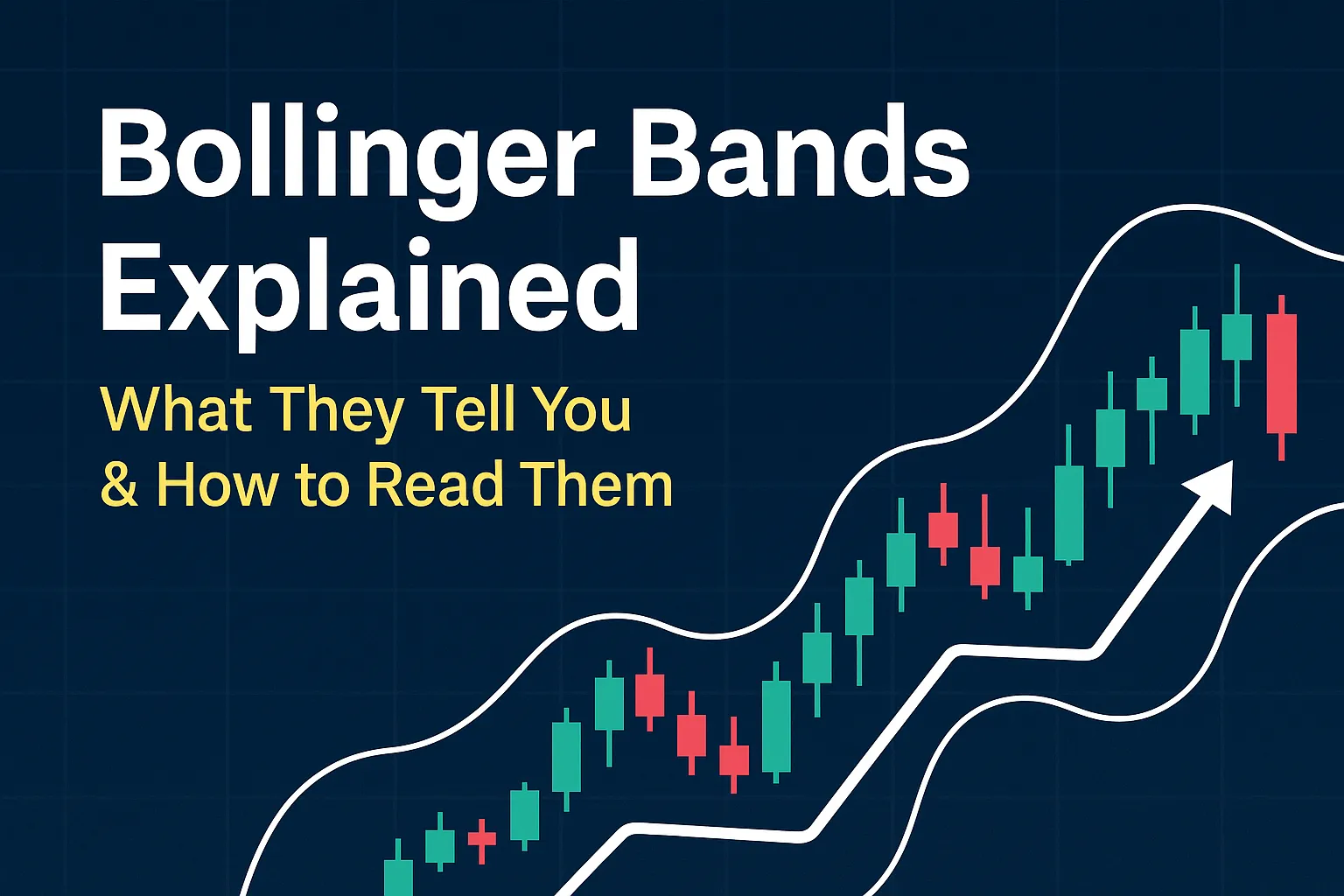
A squeeze happens when the upper and lower Bollinger Bands contract tightly around the price. This indicates low volatility, which often precedes a strong price move.
“Periods of low volatility are often followed by periods of high volatility.”
– John Bollinger
How to Identify a Squeeze
- Bollinger Bands become narrower than usual
- Volume may drop off during the squeeze
- Price enters a tight consolidation zone
You can visually spot the squeeze on most charting platforms or use a Bollinger Band Width indicator to measure it precisely.
How to Trade the Squeeze
- Wait for the squeeze to form
- Watch for a breakout candle closing outside the bands
- Confirm with volume or a momentum indicator (like RSI or MACD)
- Enter in the breakout direction
- Place a stop-loss inside the squeeze range
- Set a profit target based on the size of the squeeze or support/resistance levels
Example Setup (Long Trade)
- Squeeze forms on a 1H chart
- Price breaks above the upper band
- RSI confirms bullish momentum
- Enter long
- Place stop just below the lower band
- Set profit target 2x the range of the squeeze
Best Timeframes for the Squeeze
- 15m to 4H for intraday/swing trades
- Daily charts for swing and position trades
✅ Pro Tips
- Avoid entering before the breakout confirmation
- Combine the squeeze with volume spikes for accuracy
- Backtest it on different assets and timeframes
✅ FAQs
Q1: What does a Bollinger Bands Squeeze indicate?
It signals a period of low volatility that often leads to a sharp breakout.
Q2: Is the Squeeze reliable?
Yes, when confirmed with volume and momentum indicators, it becomes a high-probability setup.
Q3: Does the Squeeze predict direction?
No—it only signals a breakout. You must use confirmation tools to determine direction.
Q4: Can I use the Squeeze in crypto?
Absolutely. It works well on volatile assets like Bitcoin, ETH, and altcoins.
Q5: What indicators should I combine with the Squeeze?
Use RSI, MACD, or volume-based tools to confirm breakout strength.